Motorized or Manual: Choosing Shades for a Bay or Bow Window
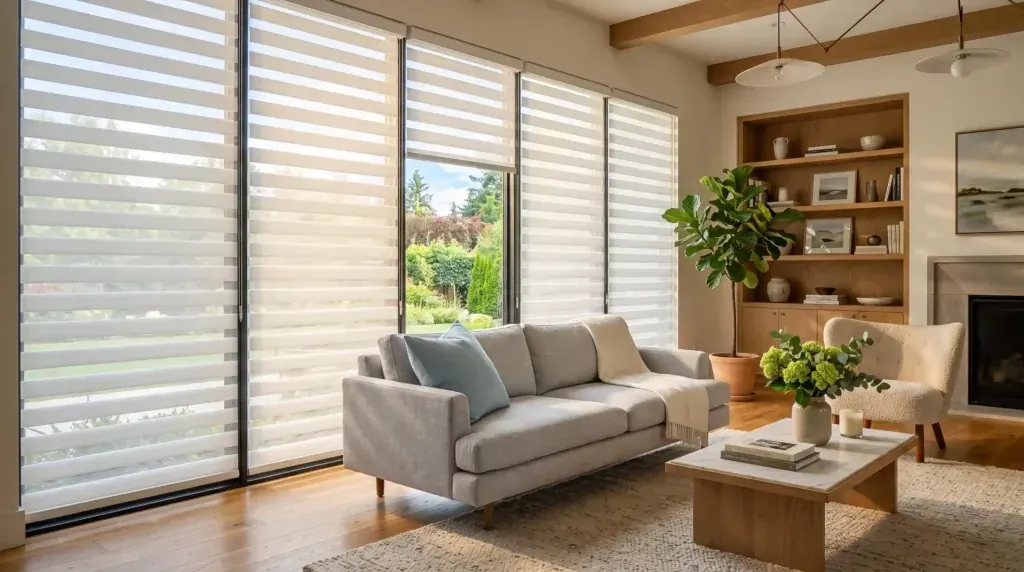
Every bay or bow window comes with a decision most homeowners don't see coming until they're already shopping: how to control several shades at once, not just how to pick a fabric.
Why Bay and Bow Windows Need a Different Approach
Most of the bay and bow window problems we get called out to look at in Lawrence trace back to one thing: someone treated the window like a single wide opening instead of a cluster of angled or curved windows that each need their own answer. It's an easy mistake to make from across the room, since a bay window does look like one feature. Up close, at the corner where two units meet, it behaves like three or four separate problems.
A standard bay has two side windows set at an angle, usually 30 or 45 degrees, framing a center window that's often fixed in place. A bow window softens those angles into a wider curve across more panes. Either way, the units share a wall but not a single flat plane, which changes almost everything about how shades get measured and mounted.
None of this makes a bay or bow window harder to treat well. It just means the shortcuts that work on a normal window, ordering one size for the whole opening or picking whatever looks good in a showroom, don't hold up once an angled corner is involved.
What Bay and Bow Window Shades Typically Cost
Design-forward choices on a bay window, like motorization or a matched custom valance across the angles, do cost more than the plainest version of the same shades. As a general national range and not a specific quote, expect a mid-grade cellular or roller shade to run somewhere between $150 and $400 per window before any of those upgrades, and that per-window figure applies to each unit in a coordinated bay rather than to the bay as a whole.
Motorization and a matching valance add to each unit's price on top of that base range, and the fabric grade you choose moves the number more than almost anything else does.
If keeping the design cohesive matters more than motorizing every unit, that's a fair trade to make. Matching fabric and mounting style across all three units costs far less than adding motors to all of them, and it solves most of the visual problem on its own. A free in-home measure is the easiest way to see both options laid out with real numbers attached.
Whether motorization makes sense for all of your bay window's units or just the hardest one to reach is easier to decide once you can see the actual layout. A free in-home measure is a good next step for working that out.
Getting an Accurate Measurement on a Multi-Angle Window
Accurate measurements matter even more when motorization is part of the plan, because a motorized headrail has less tolerance for a sloppy fit than a plain manual one does. Measure every opening in a bay or bow individually. Older Lawrence homes commonly show a quarter-inch to half-inch difference between two side units that were framed to match.
Check width near the top of each frame and again near the bottom, looking at the middle too if anything seems off, and check height on both sides. For a motorized inside mount, use the tightest number in each opening so the housing clears the frame without rubbing, since rubbing wears the fabric and stresses the motor over time.
Depth is where motorized headrails ask for more than manual ones. A motorized tube adds bulk to the roll, so an inside-mount opening needs a bit more clearance than the roughly 2 to 2.5 inches a manual shade would need. Measure with any crank handles or window hardware in their normal position, since that's what the housing has to clear every day.
Choosing How to Operate Multiple Shades at Once
Reaching a cord loop on a bay window in Lawrence usually means leaning over a window seat or a chair wedged into the nook, and that gets old fast. That's the practical case for cordless or motorized shades on this window style, separate from any safety concern about loose cords around kids or pets.
Motorized shades solve the reach problem and let you group units together so the whole bay opens or closes on one remote button or one schedule. You can also leave the units ungrouped, which matters more than people expect on a bay: the two side windows often face a slightly different direction than the center one, so the sun hits them at different times of day. Independent control means you can drop the shade on the afternoon-sun side without darkening the rest of the nook.
Manual cordless shades, with a spring lift or a bottom-up pull, sit as a lower-cost middle ground: no cord to reach, just a little more arm work than pressing a remote.
Matching Shade Styles to Each Angle of the Bay
Style choice moves the price on a bay window in Lawrence more than almost anything else, since that per-unit difference applies across several windows instead of one. Roller shades tend to sit at the lower end of the cost range and clear tight bay corners easily, which makes them a common pick when the budget needs to stretch across three or more units.
Cellular shades cost a bit more per window but add insulating air pockets that a roller shade doesn't have, which matters on a bay window with more glass surface area exposed to outside temperature swings. Roman shades sit at the higher end of the range and need more corner clearance to avoid colliding at tight angles, so they work better on a gentler bow window than on a sharp-angle bay.
A practical budget move is choosing one style for the whole bay rather than mixing a premium fabric on the center window with a cheaper one on the sides. Matched, mid-grade fabric across all the units usually looks more finished than a mismatched combination of a fancy center piece and bargain side units.
Frequently Asked Questions
Do all three windows in a bay need to match?
They don't have to be identical, but keeping the fabric and the mounting style the same across all the units is what makes the bay read as one treatment instead of three separate ones. The center window can be a wider version of the same shade rather than a completely different product.
Can I use the same shade style on a bow window as a bay window?
Usually, yes, and bow windows actually give you more flexibility since the angles between units are gentler than a standard 30 or 45 degree bay. Roller and cellular shades work well on both, while bulkier styles like roman shades have an easier time clearing the wider curves of a bow than the tighter corners of a bay.
How long does it take to get shades for a bay window once they're ordered?
It varies by product and fabric, since a bay or bow order involves multiple custom-cut units instead of one. Whoever measures your window can walk you through the timeline for the specific products you're considering.
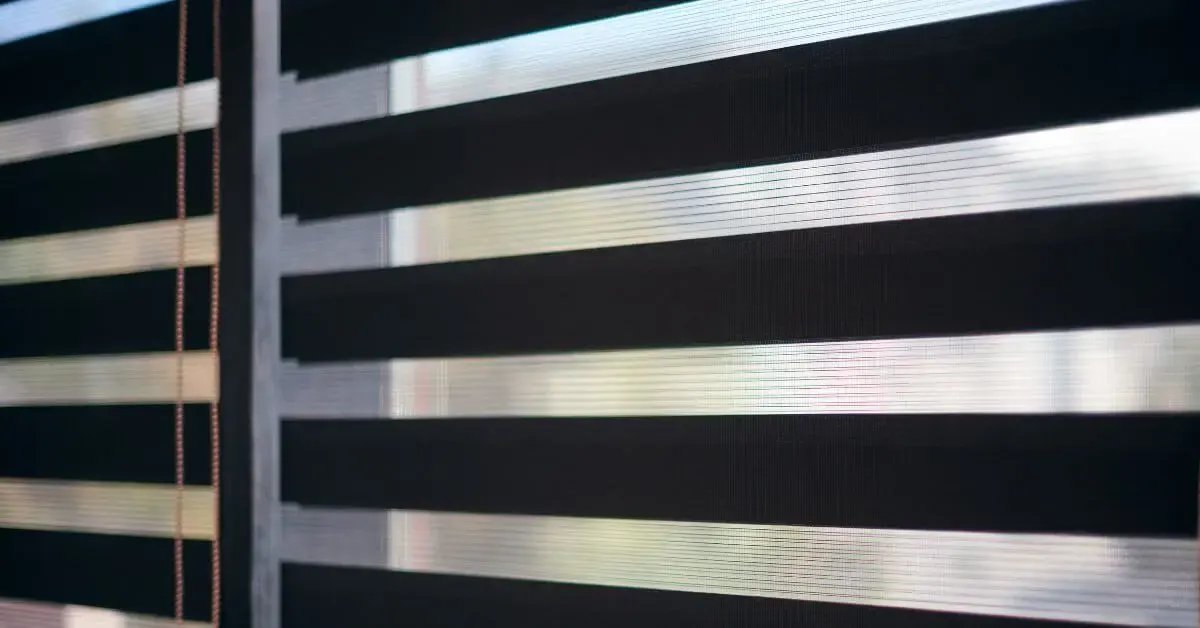 Zebra Shades Room by Room in Lawrence: A Design Playbook
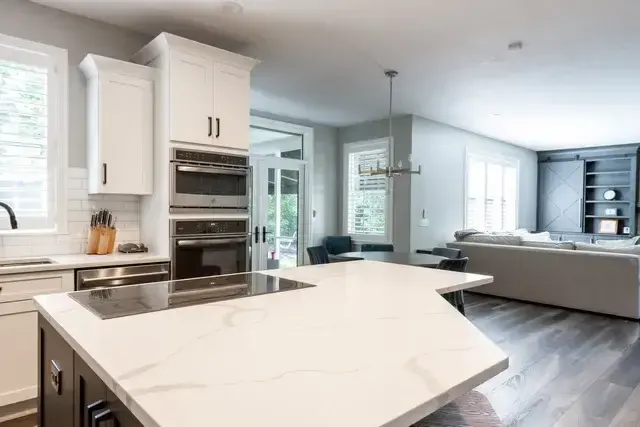 A Room by Room Window Treatment Guide for Lawrence Homes
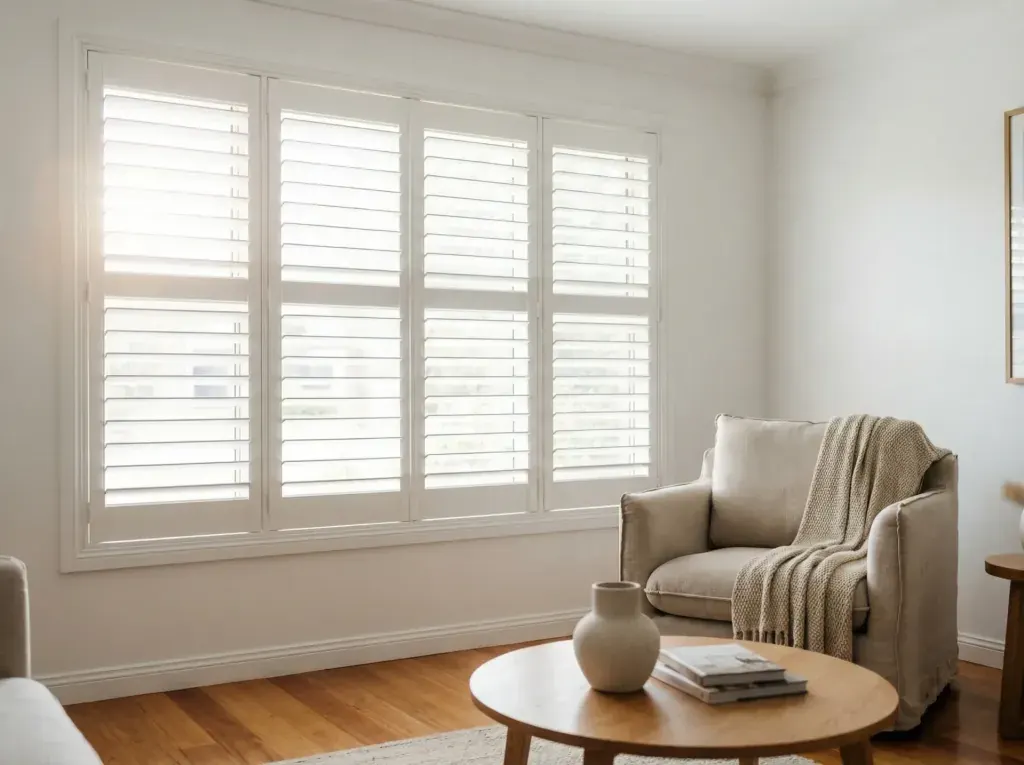 Plantation Shutters in Lawrence: Measuring and Spec Guide