Lawrence Custom Drapery
Pleated panels for the big glass at Geist
People considering this product usually want to know how it compares to the alternatives. The answers below make those comparisons directly, including the cases where a different product is the better call.
- Service: Custom Drapery for Lawrence homeowners
- Service area: Lawrence, IN and surrounding areas We book measures without much delay. What you can't compress is the fabrication window, which runs two to five weeks depending on the product and the finish. Painted shutter finishes sit at the longer end.
- Insured and bonded
- Serving Lawrence, IN since 2008
Expert Custom Drapery for Lawrence Homes
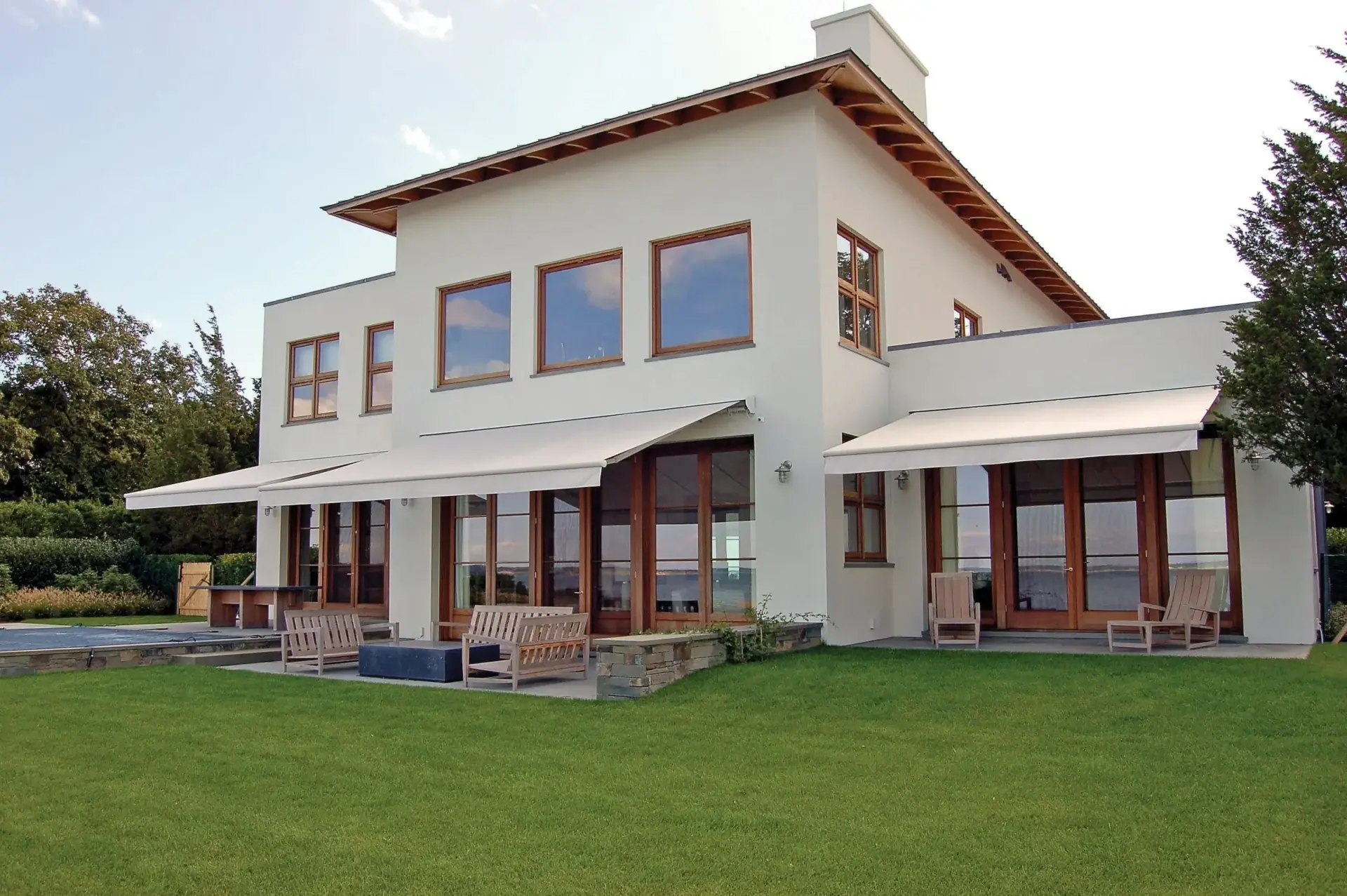
Drapery is the treatment that reads as furniture, and it belongs on the big soft rooms Lawrence built in the mid-1980s and after. The Geist facing north east corner is the clearest case: Geist Valley Estates recorded 1 July 1984 with sections running to 20 August 1988, Geist Pointe Estates on 9 November 1988, and those plans carry cathedral and gable end glass in the great room plus sliding door walls onto rear decks. Twenty to thirty two openings on a house of that type is normal. A drapery panel softens hard corners of glass that no blind can do anything about, and it's the only product here that improves how a room sounds.
Yardage is where the budget goes, and fullness is the multiplier nobody explains. A panel at 2.5 times fullness uses two and a half times the finished width in fabric, so a wide opening doesn't cost proportionally more, it costs steeply more. Drapery is also the product where the spread inside Lawrence shows up: the citywide median home value is $230,100, and the Geist facing corner sits well above it. Skimp on fullness and you get flat panels that never hang right. Then there's light: a rod set at the opening leaves the return at each end open and the two panels meeting without overlap, so daylight comes around the sides and through the center. Buckram, returns and overlap fix that, and they're specification items, not accessories.
Signs You Need Custom Drapery
If you notice any of these in your Lawrence home, it is worth booking a measure. None of it is urgent, and none of it fixes itself either.
A cat has climbed the leading edge to shreds
The rod has bowed in the middle under the weight
Open panels cover a third of the glass
Sun has faded the leading edge of a panel
Cooking smells have settled into the living room panels
A bracket has pulled out of the drywall
Closed drapery still lets a stripe of light through
New panels won't clear the shade cassette behind them
A bedroom needs softness that a shade alone can't give
Voices carry and ring in a room with bare glass
How Lawrence Window Treatments Handles Custom Drapery
Every job follows the same five-step process. Transparent, thorough, and done right the first time.
Lining and interlining decided
Return and overlap dimensioned
Rod hung, panels steamed on site
Stationary or drawing panels decided
Written contract per IC 24-5-11
Custom Drapery in Lawrence
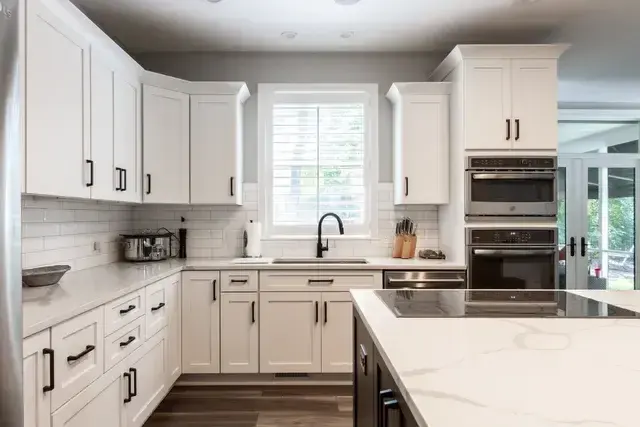
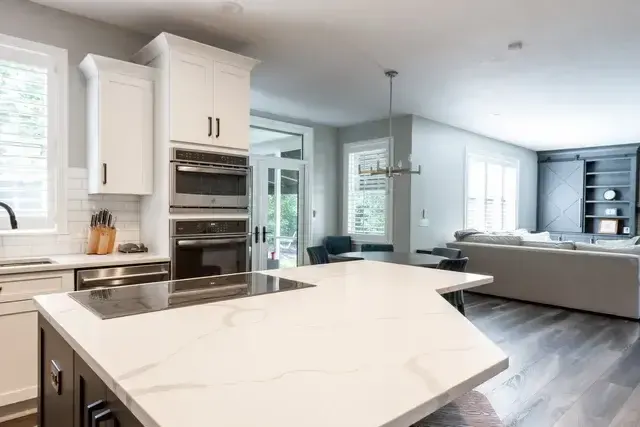
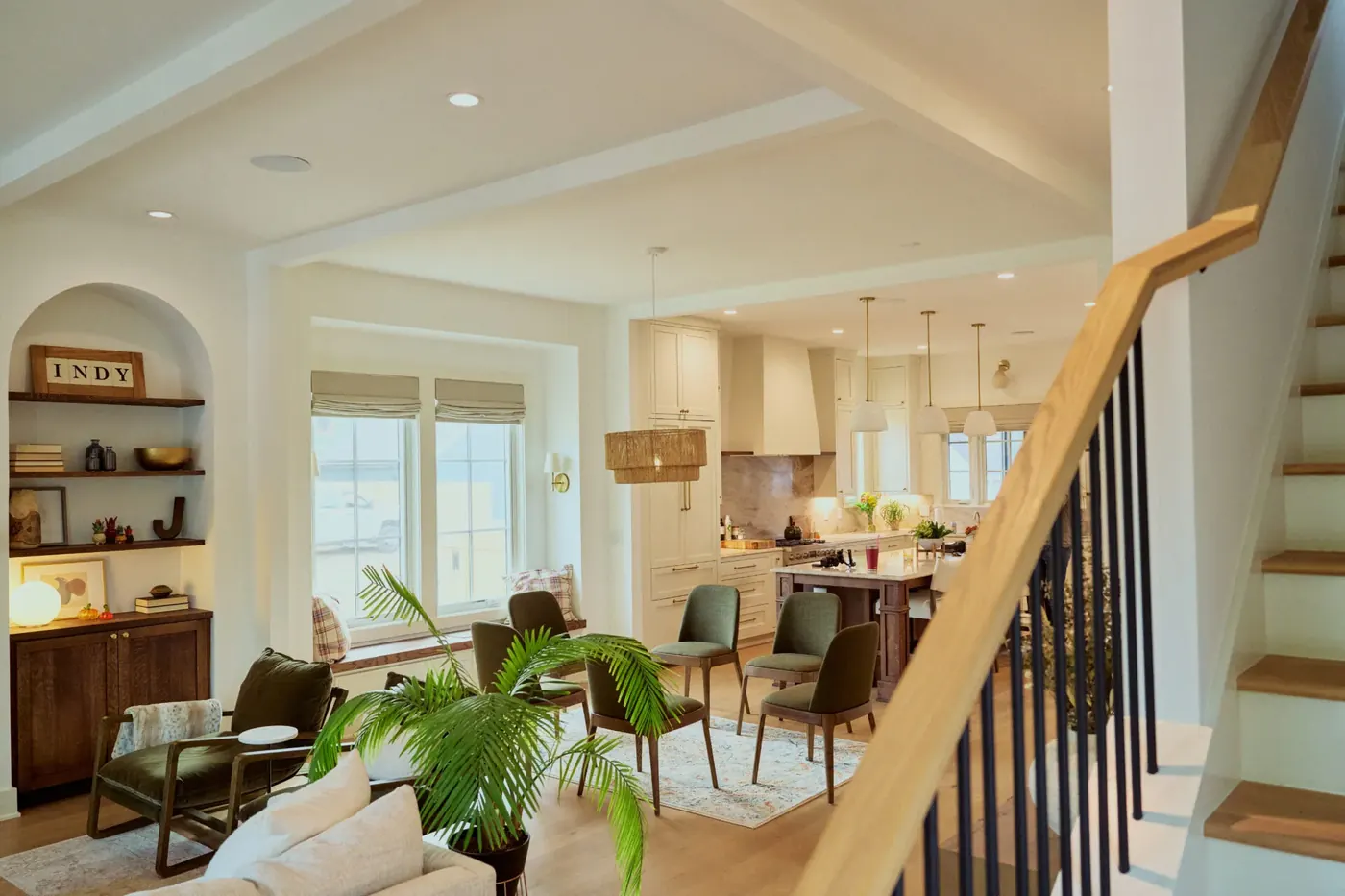
Photographs from real custom drapery jobs completed by our crew in Lawrence and surrounding areas.
What Custom Drapery Includes
Every Lawrence job is documented item by item. Here is what the crew covers.
Rod height and rod width set first, since where the hardware goes decides how the room reads
Finished length measured from the ring or hook down to the floor, at both ends and the center
Floor checked for level across the opening, because an out-of-level floor shows in the hem
Fullness chosen against the fabric and the look, commonly between two and two and a half times the rod width
Widths per panel calculated from fullness, fabric width and the seam allowance, then written on the order
Pattern repeat measured and yardage figured so motifs land at the same height on every panel
Pleat style specified per room, with a sample photo attached to the order so nothing is assumed
Buckram weight selected so the heading stands up instead of collapsing over the rings
Lining specified per elevation, plain, blackout or none, and stated in writing
Interlining added where the fabric needs body or where the room wants weight and quiet
Return depth and overlap at the center dimensioned so panels close without a gap down the middle
Stack back allowed for on the wall so open panels clear the glass instead of covering it
Rod, rings, brackets and finials selected as one set with the panel weight in mind
Mounting substrate found before install day so brackets land in framing or in an anchor rated for the load
Extra brackets added on long rods so the rod can't bow under a full set of lined panels
Hems weighted and corners squared so panels hang straight rather than kicking out
Panels steamed on site to drop fabric memory from folding and shipping
Panels dressed and tied for a few days so the folds train and each panel breaks the same way
What Custom Drapery Costs in Lawrence
Published national figures for custom drapery run roughly $300 to $4,000 per window. That's a national range for the category, not a quote for anything in Lawrence, and drapery has the widest spread of anything we sell for a reason. Fabric is the largest single variable and it's priced by the yard, so fullness and panel count multiply whatever you choose. A large pattern repeat adds yardage before a single panel is cut. After fabric it's construction: lining, interlining, pleat style and hand finishing. Then hardware, which on a long span with heavy panels stops being decorative and starts being structural. Two windows of the same size in Marion County can land at opposite ends of that range purely on cloth.
How Custom Drapery Differs by Product
Every product in this trade behaves differently in a room. Here is what that means for this work.
Pinch pleat: The traditional three-finger heading, hand-tacked and stiffened with buckram. It carries formal fabrics well and holds a deep, consistent fold. Specify it in dining rooms and primary bedrooms where the drapery is meant to look tailored.
Euro pleat: A two-finger pleat tacked at the top of the heading rather than the bottom, so the fold opens as it falls. It reads cleaner and more current than a pinch pleat while keeping the same structure behind it.
Goblet pleat: A rounded, stuffed pleat that stands proud of the heading. It's a decorative choice for tall rooms with real ceiling height, and it wants a fabric with enough body to hold the shape without slumping.
Ripplefold: Snap carriers on a track hold the fabric in a continuous S-wave with no pleats at all. It stacks tightly, it draws easily on wide spans, and it's the heading we reach for on a modern room or a long wall of glass.
Flat panel and rod pocket: The simplest headings. A flat panel on rings suits a stationary decorative panel, and a rod pocket suits a light fabric on a rod nobody plans to draw. Neither is built for daily operation.
Cotton sateen lining: The standard lining. It protects the face fabric from sun, gives the panel body so it hangs straight, and presents a consistent white or ivory face to the street from every window in the house.
Blackout lining: A dense multi-layer lining that stops light through the cloth. It adds real weight, which the rod and brackets have to carry, and it makes a bedroom noticeably darker even though light still comes around the panel edges.
Interlining: A soft flannel layer sewn between face fabric and lining. It adds drape, softens the fold, quiets the room a little and helps at a cold window in January. It's the difference between a nice panel and a luxurious one.
Decorative rod with rings: A visible rod, rings and finials, drawn by hand or with a baton. It puts the hardware into the design of the room. Panel weight decides diameter, material and how many brackets the span needs.
Traverse rod: A mechanical rod with carriers and a cord or baton draw, often concealed behind a heading or a valance. It's what you want when panels get closed every night and the hardware is meant to disappear.
Custom Drapery FAQ
Questions we hear most often from Lawrence homeowners considering custom drapery.
Custom Drapery Across Lawrence
We measure and install in every one of these Lawrence neighborhoods. Each has its own page with the build eras, window conditions and mounting notes for that section.
- Custom Drapery in Fort Benjamin Harrison Historic District and Lawton Loop
- Custom Drapery in Lawrence Village at the Fort
- Custom Drapery in Greentree at Fort Harrison
- Custom Drapery in Harrison Ridge and Harrison Run
- Custom Drapery in Harrison Park and Harrison by the Park
- Custom Drapery in Oaklandon
- Custom Drapery in Indian Lake
- Custom Drapery in Geist's Edge
- Custom Drapery in Lanesville
- Custom Drapery in Lawrence Park, Lawrence Terrace and Lawrence Manor
- Custom Drapery in North Lawrence Park
- Custom Drapery in The Roses of Lawrence
- Custom Drapery in Lawrence Lakes and Lawrence Woods
- Custom Drapery in Winding Creek and Winding Wood
- Custom Drapery in Traditions and Peach Tree Cove
Other Window Treatment Services in Lawrence
Lawrence Window Treatments handles the full scope of window treatment work. Explore our other services below.
Schedule Your Free In-Home Measure in Lawrence
Reach Us Directly
Our team prioritizes scheduled measures and service calls, and books in-home measures during business hours.
Ready to Book Your Measure?
Call us to set up an in-home measure, or to ask about a treatment that has stopped working. We will talk it through on the phone first.