Cordless Blinds Serving Lawrence, IN
No cords, and a spring that weakens with the years
A quick summary before the details: this is a made-to-order product, measured in the home and built to your numbers. The answers here explain what that means for pricing, timing and what happens if something fails.
- Service: Cordless Blinds for Lawrence homeowners
- Service area: Lawrence, IN and surrounding areas Realistic sequence: appointment for the measure, a written specification, then fabrication of two to five weeks, then install. None of it needs rushing, and pushing the factory is where mistakes on custom sizes come from.
- Insured and bonded
- Serving Lawrence, IN since 2008
Expert Cordless Blinds for Lawrence Homes
Cordless lift removes the operating cord entirely, and Lawrence has more reason to care than most suburbs. The Metropolitan School District of Lawrence Township is the ninth largest district in Indiana and runs four early learning centers along with eleven elementary magnet schools, and the city's median age of 34.3 is the youngest of the places we cover. Greentree at Fort Harrison is the neighborhood where the specification repeats most cleanly: all five phases were recorded between 2 March 2001 and 12 February 2002, so one plan set, one supplier and 16 to 24 openings per house that genuinely match from one address to the next.
Cordless is not maintenance free, and the part nobody discloses is the spring. A cordless shade balances the weight of the fabric against a lift spring inside the headrail, and springs weaken over years of cycling. The symptom is a shade that creeps down on its own or won't stay where you put it, and it usually appears first on the widest or heaviest shade in the house. Heavier fabrics and taller drops shorten that clock. On the product safety side, ANSI/WCMA A100.1-2022 governs the product rather than any installer, and inner cord hazards fall under 16 CFR 1120.3.
Signs You Need Cordless Blinds
If you notice any of these in your Lawrence home, it is worth booking a measure. None of it is urgent, and none of it fixes itself either.
A toddler has started pulling on the blinds
An old blind drifts down after you set it
The headrail won't fit the depth you have
Every window still has the builder's corded blinds
Cords were cut off and now nothing operates
The dog gets tangled in a hanging cord
One end of the bottom rail sits low
Tenants keep tangling or breaking hanging cords
A slat color from a later order doesn't match
A nursery is being set up before a due date
How Lawrence Window Treatments Handles Cordless Blinds
Every job follows the same five-step process. Transparent, thorough, and done right the first time.
Walkthrough of every room children use
Finished weight checked against limits
Even-lift technique demonstrated
Bottom rail weight adjusted on short openings
Full travel proven at every window
Cordless Blinds in Lawrence
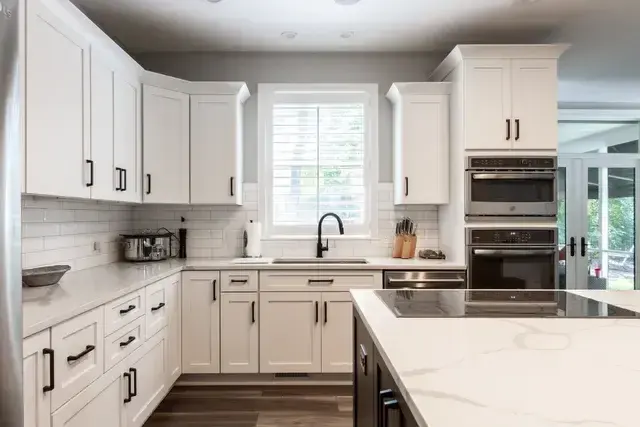
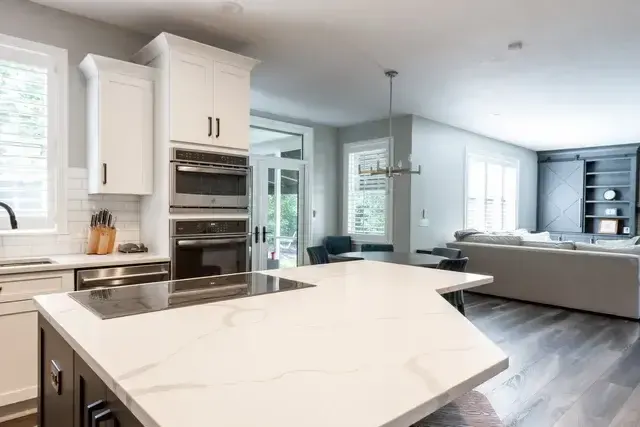
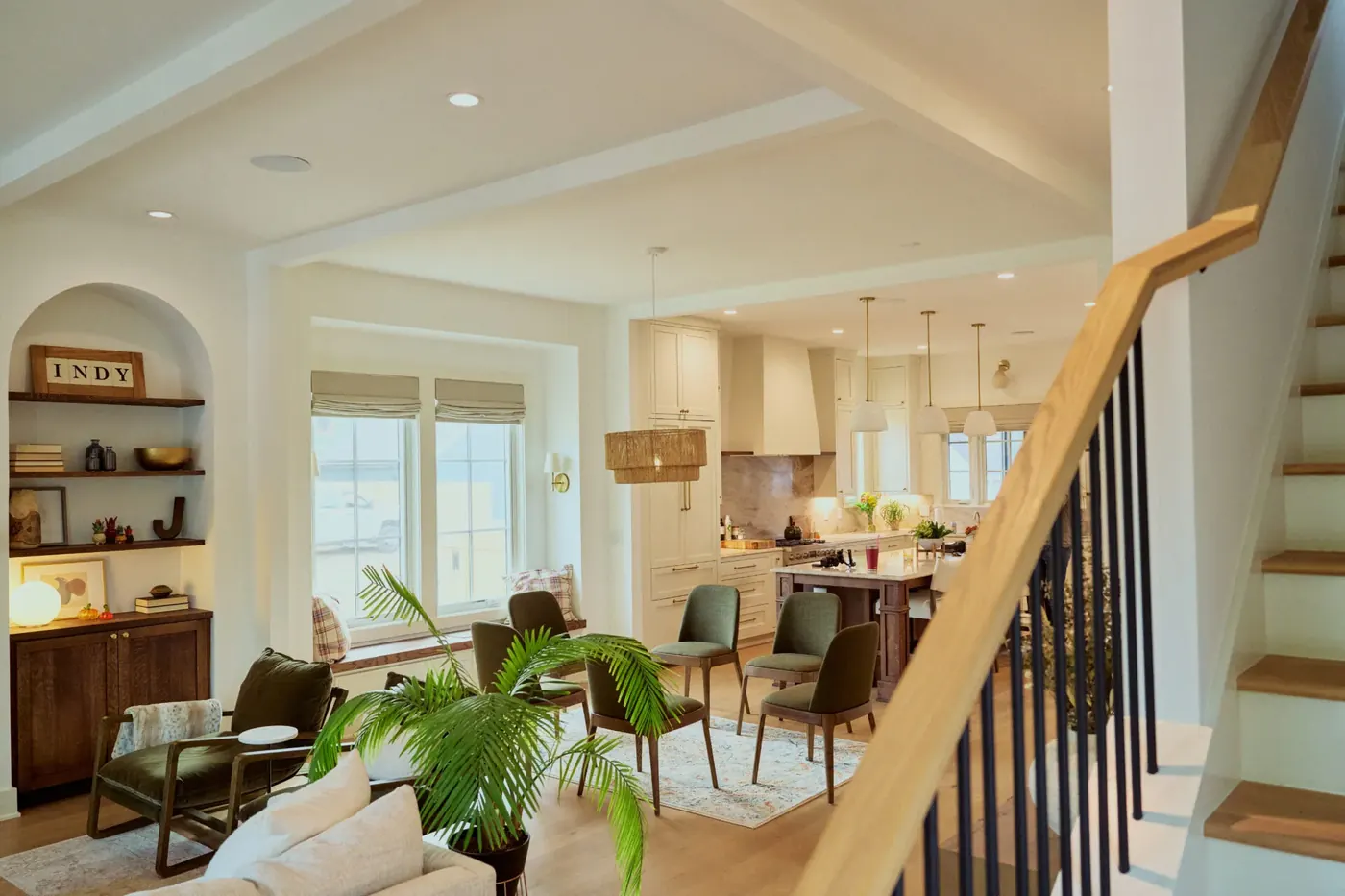
Photographs from real cordless blinds jobs completed by our crew in Lawrence and surrounding areas.
What Cordless Blinds Includes
Every Lawrence job is documented item by item. Here is what the crew covers.
Every room a child or a pet uses identified at the walkthrough, since that is where cordless stops being optional
The honest life of a spring lift explained before the sale, because springs weaken over years of use
Finished weight checked against the manufacturer's published cordless width and weight limits, opening by opening
Wide and heavy units flagged where a spring lift would be unpleasant to operate every day
A wand lift or a motor offered wherever the weight or the height makes a spring the wrong answer
Three widths and three heights taken per opening with a corner-to-corner check for square
Mounting depth read so the headrail sits where you want it, since a cordless headrail is not a slimmer one
Bottom rail height and reach considered on tall windows, because you have to touch the rail to move it
Every product on the order specified to conform to ANSI/WCMA A100.1-2022 for cord access
The inner-cord distinction made plainly: no operating cord you can reach is not the same as no cord inside the product
No claim made about any federal custom cord rule, since the 2023 court decision vacated the rule that gets quoted
Tilt control specified separately from the lift, usually a wand, so nothing hangs beside the window
Light gap per side disclosed for inside mounts and written on the paperwork before ordering
Existing corded product in the house inventoried, so the rooms that matter most get done first if the job is staged
Old blinds pulled and their cords removed from the house rather than coiled and left in a drawer
How to operate the lift evenly demonstrated at handover, with a hand near each end of the bottom rail
A written contract carrying the scope, the dates and the total, as IC 24-5-11 requires on residential jobs over $150
Every unit raised and lowered end to end twice on install day to prove it holds where you stop it
What Cordless Blinds Cost in Lawrence
National figures put stock blinds and shades near $60 to $600 a window with custom-fabricated units at roughly $250 to $2,600, and motorized units at roughly $300 to $1,500 per window installed. Those are national category ranges, not a quote for any address in Lawrence. Cordless is usually a modest addition to whatever product you were already buying rather than a category of its own, and on many lines it is now the standard lift rather than the upgrade. Where cost climbs is at the edges: a wide faux wood unit that needs a heavier spring, a tall window where a wand lift makes more sense, or a heavy shade where a motor is the honest answer. Lawrence Window Treatments prices from measured openings across Marion County.
How Cordless Blinds Differ by Product
Every product in this trade behaves differently in a room. Here is what that means for this work.
Constant-force spring lift: A coiled spring in the headrail balanced against the weight of that specific blind, so the unit stays where you leave it. It's the mechanism behind almost every cordless product, and it's the part that ages.
Cordless faux wood and wood blinds: The heaviest common cordless product, which is why the spring gets sized carefully and why a wide unit wants two hands on the bottom rail. Popular in kids' rooms because it looks like the rest of the house.
Cordless aluminum blinds: Light slats mean a light spring and an easy lift, which makes cordless a natural fit here. It's the version that goes into a utility room, an office or a rental where nobody should be untangling a cord.
Cordless cellular and pleated shades: Fabric weighs little, so the lift stays smooth even on tall units, and there are no route holes because there's no lift cord passing through the fabric. This is the family where cordless works best with the fewest tradeoffs.
Spring-assist cordless roller: A spring inside the roller tube in place of a bead chain. It suits small and medium shades. On tall or heavy fabric a chain over a clutch still handles the weight better, and we'll say so rather than selling the tidier option.
Wand lift: A rigid wand you push up and pull down, which moves the bottom rail evenly without any cord. It's the answer on wide units where a bare bottom rail is awkward to grab, and it keeps both ends traveling together.
Motorized lift: The other way to have no operating cord in the room. On heavy, wide or high windows it's better than a spring, because nothing about the weight ends up in your hands. Plan for batteries about once a year on that path.
Wand tilt with a cordless lift: On a blind, tilt and lift are separate systems. Pairing a cordless lift with a wand tilt means nothing hangs beside the window at all, and the wand clears a door handle better than a tilt cord ever did.
Factory weight balancing: The spring is matched at the factory to the finished size and weight of your blind. That's why a cordless unit can't be trimmed down later or fitted with a heavier bottom rail without the lift behaving differently afterward.
Shaped bottom rail: A bottom rail with a grip or a lip built into it, so there's somewhere natural to put your fingers at each end. It sounds like a small thing and it decides whether a cordless blind feels good or annoying to use daily.
Cordless Blinds FAQ
Questions we hear most often from Lawrence homeowners considering cordless blinds.
Cordless Blinds Across Lawrence
We measure and install in every one of these Lawrence neighborhoods. Each has its own page with the build eras, window conditions and mounting notes for that section.
- Cordless Blinds in Fort Benjamin Harrison Historic District and Lawton Loop
- Cordless Blinds in Lawrence Village at the Fort
- Cordless Blinds in Greentree at Fort Harrison
- Cordless Blinds in Harrison Ridge and Harrison Run
- Cordless Blinds in Harrison Park and Harrison by the Park
- Cordless Blinds in Oaklandon
- Cordless Blinds in Indian Lake
- Cordless Blinds in Geist's Edge
- Cordless Blinds in Lanesville
- Cordless Blinds in Lawrence Park, Lawrence Terrace and Lawrence Manor
- Cordless Blinds in North Lawrence Park
- Cordless Blinds in The Roses of Lawrence
- Cordless Blinds in Lawrence Lakes and Lawrence Woods
- Cordless Blinds in Winding Creek and Winding Wood
- Cordless Blinds in Traditions and Peach Tree Cove
Other Window Treatment Services in Lawrence
Lawrence Window Treatments handles the full scope of window treatment work. Explore our other services below.
Schedule Your Free In-Home Measure in Lawrence
Reach Us Directly
Our team prioritizes scheduled measures and service calls, and books in-home measures during business hours.
Ready to Book Your Measure?
Call us to set up an in-home measure, or to ask about a treatment that has stopped working. We will talk it through on the phone first.