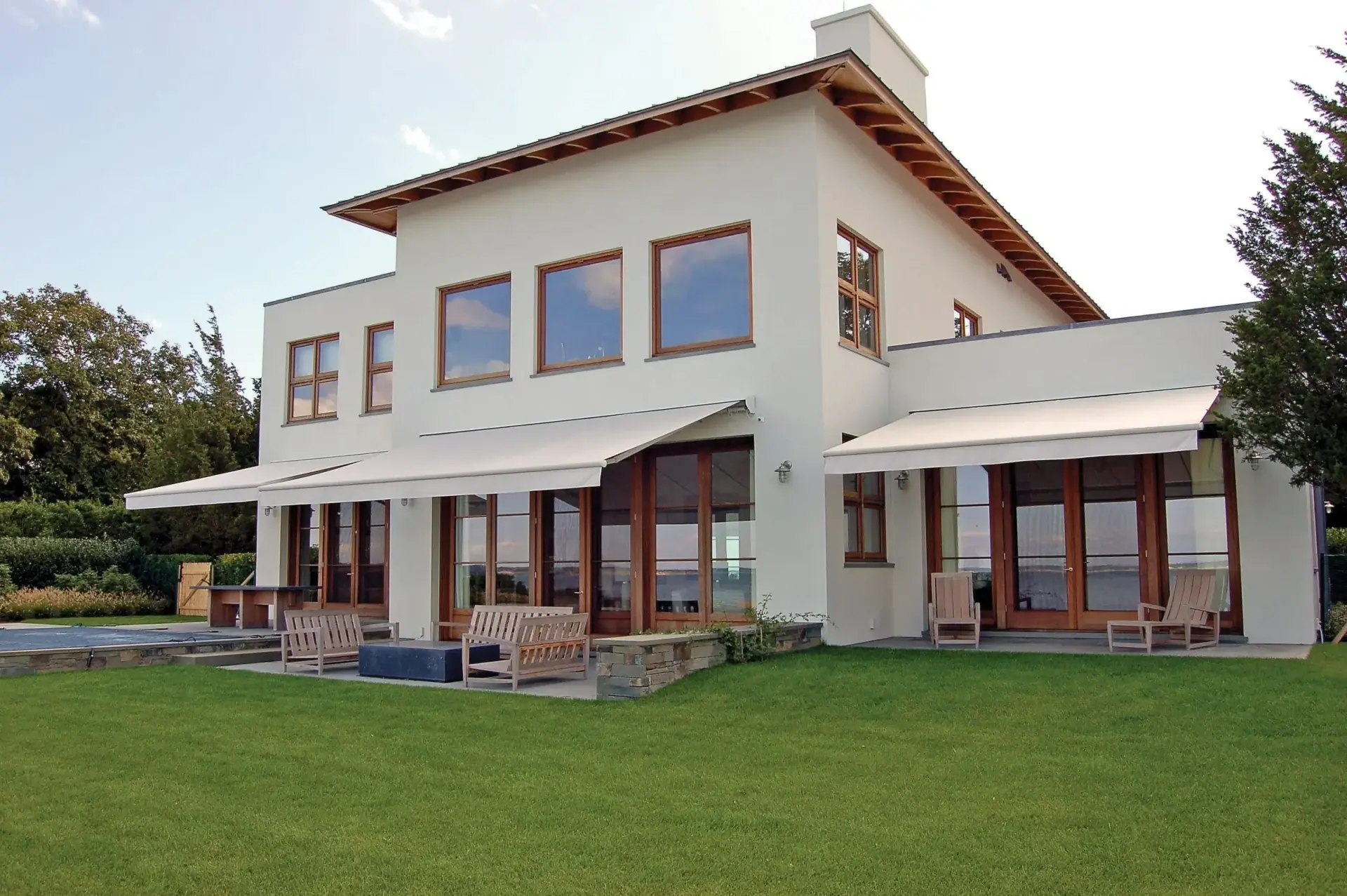
Window Treatment Work in Lanesville - the original 1849 Lawrence plat
Custom Lawrence window treatment crews serving Lanesville - the original 1849 Lawrence plat homeowners with free in-home measure, repair, replacement.
These questions come from houses around here in Lawrence. Newer construction usually offers good mounting depth and standard rectangular openings, which widens the product options considerably.
- Services: faux wood blinds, wood blinds, vertical blinds, aluminum mini blinds
- Service area: Lanesville - the original 1849 Lawrence plat, Lawrence, IN and surrounding areas It depends what's broken. Hardware repairs on existing blinds and shades usually come together quickly. Replacing an entire custom product means starting the fabrication clock again, which is two to five weeks in most cases.
- Insured and bonded
- Serving Lawrence, IN since 2008
Local Window Treatment Experience in Lanesville - the original 1849 Lawrence plat
The window schedule in the original plat is the hardest kind to price from a distance, because almost nothing repeats. Expect 12 to 20 openings per house including the lower level ones, with tall narrow proportions, transoms over front doors, and no modern shapes at all. There is no great room glass anywhere in this stock. What you get instead is a set of individually built houses from the late 1800s and early 1900s where the second floor openings do not match the first, the back of the house does not match the front, and a post war addition brought in a third size. We measure and schedule every opening rather than counting repeats, because in the 1849 plat there usually are none.</p><p style="font-size:16px;color:#4a5a6a;line-height:1.75;margin:16px 0 0">The sun does something here that it does nowhere else in Lawrence. The original plat is aligned to the old Bee Line Railroad corridor and Pendleton Pike, both of which run diagonally across the section grid, so front elevations are not squared to the compass the way every post war subdivision in the city is. Light crosses these facades at angles that the grid plats never see, which means the room that overheats is often not the one you would predict from a floor plan, and a west ish elevation can take sun from mid afternoon on rather than late. We take the bearing at the house instead of reading it off a map.
We have served Lanesville - the original 1849 Lawrence plat homeowners through the full range of window treatment needs, from inspections and repairs to full replacements. Whatever the system, our Lawrence crew approaches every project with clear communication and respect for your property.
Housing in the 1849 plat: 175 years on the same crossroads
Lanesville has been building on the same ground since 1849, and the mid century city grew straight through it rather than around it. The result is late-19th century vernacular frame next to early-20th century cottages next to post war infill, mixed one and two story, all individually built. No builder is on record for any of it, no home count or lot size is published at parcel level for the original plat, and no price band was sourced. Citywide, only 3.1 percent of Lawrence housing predates 1940, which is 623 units, and in absolute terms that is more than twice what McCordsville holds, but it is thinly spread across three separate parts of the city.
That mix is why an era shortcut fails here. A frame house from the 1890s on Kensil Street and a 1950s infill house forty feet away share a street and share no construction assumption. One has wood jambs with narrow applied casing and plaster returns; the other has shallow post war jambs and a wide front opening. Both have settled, and the older one has settled for more than a century. Nothing in this section is under design review, so alterations happened whenever owners wanted them, which is the other reason two houses of the same apparent age can present completely different openings behind the same front.
Narrow casing, storm build ups and diagonal sun in the original plat
Mounting depth is the first thing that fails here and the first thing we check. These openings have wood jambs with narrow applied casing, plaster returns in the oldest houses, and storm build ups added over the decades that sit inside the opening and take away the landing an inside mount headrail needs. A jamb that looks four inches deep from the doorway can read under an inch and a half of usable depth at the header. So the working assumption in the 1849 plat is an outside mount on the casing, with an inside mount treated as a bonus we confirm at the measure rather than a default we promise on the phone.
Squareness follows from age. This is part of the city's 623 pre-1940 units on a plat recorded in 1849, so every opening gets three point measured, width at header, middle and sill, and height at both jambs plus the center, with the order cut to the smallest controlling dimension. Where an inside mount does clear, the light gap is the disclosure that matters: Lutron publishes 3/4 inch per side on an inside mount Roller 20/64 and a factory deduction of 1/16 inch per side. On a tall narrow opening in a 130 year old frame house, an inside mount traces every bit of the wedge the settlement created. An outside mount covers it. That is the whole argument.
Storm build ups and plaster returns
Two different depth killers in the same section. The storm build up sits inside the opening and eats the headrail landing; the plaster return in the oldest houses gives you a soft, uneven surface with no square corner to reference. We read depth at the header on every opening in the 1849 plat and we tell you at the measure whether an inside mount clears, rather than finding out on install day.
Diagonal sun off Pendleton Pike
Because the original plat follows the Bee Line Railroad and Pendleton Pike rather than the section grid, the sun crosses these fronts at angles no other part of Lawrence sees. A room that a floor plan says is south facing can take direct low sun from the south west for a long stretch of the afternoon. We take a compass bearing at the house before choosing an openness factor, because here the map genuinely misleads.
Twelve to twenty openings, almost no repeats
Individually built houses from the 1890s onward, extended and altered without any design review, produce schedules where the upstairs does not match the downstairs and the addition matches neither. That means a longer measure and a longer order list than a subdivision house with the same window count. It also means the quote is genuinely built from your openings rather than a template.
Products that suit a 19th century frame house on Pendleton Pike
The guiding rule in the 1849 plat is to cover the opening rather than sit inside it, because the opening is the least reliable thing in the house. That points toward outside mounts, extension brackets and top treatments that hide a settled header, and away from anything that depends on a true rectangle. Tall narrow proportions also reward soft treatments in a way that a 1990s production house does not. National ranges: custom treatments $250 to $2,600 per window, drapery $300 to $4,000 per window depending on fullness and yardage. Lead time is 2 to 5 weeks, we are insured and insured, and IC 24-5-11 requires a written contract with scope, dates and total price on residential work over $150.
Outside mount roller shades on extension brackets
The extension bracket is what makes this work in the 1849 plat. It carries the roller tube clear of a storm build up and clear of narrow applied casing, so the shade covers the whole opening plus an overlap instead of fighting for depth inside it. It also hides the out of square edge that a century of settlement produced. Choose the roll direction at the measure, because a reverse roll gives extra clearance but cannot be used with a fascia.
Pinch pleat drapery with a buckram heading
Tall narrow openings in a late-19th century frame house are the natural home for drapery, and the buckram heading is what keeps a pleat crisp over years rather than collapsing. Two practical notes. Stack back matters on a narrow opening, so the rod runs wider than the trim and the panels clear the glass when open. And on the Pendleton Pike elevation, a lined panel does more for evening headlight glare than any hard product will.
Room darkening cellular shades outside the casing
For bedrooms where the storm build up rules out an inside mount and you still want the opening genuinely dark. Mounted outside the casing with a generous overlap, a room darkening cellular gets far closer to dark than the same shade fitted inside a settled 1890s opening ever could. The cell structure also does real work in January, when the Indianapolis average low is 20.9F and these houses have the thinnest walls in the city.
A custom cornice over the window and its transom
The front door transom and the tall narrow openings beside it are hard to treat individually and easy to treat together. A cornice built across the whole assembly hides a header that is no longer level, gives a shade or drapery a clean top line, and reads correctly on a 19th century facade in a way a modern valance does not. It is also the cheapest way to make three mismatched openings on one wall look deliberate.
Where the original plat sits, and what is around it
The 1849 plat sits on Pendleton Pike, which is US 36, in the older heart of the city between I-465 exits 40 and 42, with the former Bee Line Railroad corridor running alongside. Four streets are verified in the county's street layer for this section: Pendleton Pike, Kensil St, N Franklin Rd and E 56th St. Locals call the area the Pike, and the city's own visitor site calls it Lawrence's oldest section. Schools run through the Metropolitan School District of Lawrence Township, the ninth largest district in Indiana, with Belzer or Craig at the middle level and Lawrence Central or Lawrence North beyond.
Window Treatment Services in Lanesville - the original 1849 Lawrence plat
Every service Lawrence Window Treatments offers across Lawrence is available to Lanesville - the original 1849 Lawrence plat homeowners.
Faux Wood Blinds in Lanesville - the original 1849 Lawrence plat
Composite slats sized for Lawrence drywall returns
Learn more →Wood Blinds in Lanesville - the original 1849 Lawrence plat
Basswood for the rooms with real trim
Learn more →Vertical Blinds in Lanesville - the original 1849 Lawrence plat
Door wall coverage that stacks where you walk
Learn more →Aluminum Mini Blinds in Lanesville - the original 1849 Lawrence plat
Thin slats where depth and budget are tight
Learn more →Roller Shades in Lanesville - the original 1849 Lawrence plat
Clean roller lines, with the light gap disclosed
Learn more →Solar Shades in Lanesville - the original 1849 Lawrence plat
Glare control that keeps the water in view
Learn more →Cellular Shades in Lanesville - the original 1849 Lawrence plat
Trapped air for a climate that swings both ways
Learn more →Zebra Shades in Lanesville - the original 1849 Lawrence plat
Banded fabric for view or privacy, honestly explained
Learn more →Roman Shades in Lanesville - the original 1849 Lawrence plat
Soft folds for openings built before blinds
Learn more →Woven Wood Shades in Lanesville - the original 1849 Lawrence plat
Bamboo and reed for houses with real trees
Learn more →Blackout Shades in Lanesville - the original 1849 Lawrence plat
Genuine darkness needs channels, not just fabric
Learn more →Plantation Shutters in Lanesville - the original 1849 Lawrence plat
Fitted panels for openings that never repeat
Learn more →Cafe Shutters in Lanesville - the original 1849 Lawrence plat
Screen the street, keep the daylight above
Learn more →Motorized Shades in Lanesville - the original 1849 Lawrence plat
Automation for glass nobody has reached since 2001
Learn more →Custom Drapery in Lanesville - the original 1849 Lawrence plat
Pleated panels for the big glass at Geist
Learn more →Valances & Top Treatments in Lanesville - the original 1849 Lawrence plat
The finishing layer over the working one
Learn more →Exterior Solar Shades in Lanesville - the original 1849 Lawrence plat
Stop the sun before it reaches the glass
Learn more →Retractable Awnings in Lanesville - the original 1849 Lawrence plat
Deck shade that retracts before the weather arrives
Learn more →Commercial Window Treatments in Lanesville - the original 1849 Lawrence plat
Building wide specification without the dye lot surprise
Learn more →Skylight Shades in Lanesville - the original 1849 Lawrence plat
Tensioned channels for glass nobody has reached
Learn more →Sliding Glass Door Blinds in Lanesville - the original 1849 Lawrence plat
The stack parks off the panel you actually use
Learn more →Panel Track Blinds in Lanesville - the original 1849 Lawrence plat
Wide sheets for wide glass, stack side decided upfront
Learn more →Sheer Shades in Lanesville - the original 1849 Lawrence plat
Soft light for 1908 openings, never a dark room
Learn more →Pleated Shades in Lanesville - the original 1849 Lawrence plat
One folded layer, no cell, priced accordingly
Learn more →Bamboo Shades in Lanesville - the original 1849 Lawrence plat
Real weave, real light through it, liner optional
Learn more →Dual Shades in Lanesville - the original 1849 Lawrence plat
Banded shades that keep registration because the tube is level
Learn more →Top-Down Bottom-Up Shades in Lanesville - the original 1849 Lawrence plat
Two rails, two mechanisms, glass lost at both ends
Learn more →Cordless Blinds in Lanesville - the original 1849 Lawrence plat
No cords, and a spring that weakens with the years
Learn more →Hardwood Shutters in Lanesville - the original 1849 Lawrence plat
Real wood where the woodwork earns it
Learn more →Composite Shutters in Lanesville - the original 1849 Lawrence plat
Heavy panels, and the divider rail that carries them
Learn more →Smart Home Shade Integration in Lanesville - the original 1849 Lawrence plat
Protocols, range and what happens when the hub dies
Learn more →Blind Repair & Restring in Lanesville - the original 1849 Lawrence plat
Restrung where parts exist, replaced where they don't
Learn more →Shutter Repair in Lanesville - the original 1849 Lawrence plat
Matched where it can be, said plainly where it can't
Learn more →Motorization Retrofit in Lanesville - the original 1849 Lawrence plat
Motors into headrails that will actually take them
Learn more →Outdoor Patio Shades in Lanesville - the original 1849 Lawrence plat
Anchored into structure, because wind is the enemy
Learn more →Office Window Treatments in Lanesville - the original 1849 Lawrence plat
Glare by elevation, controls within reach
Learn more →Healthcare Window Treatments in Lanesville - the original 1849 Lawrence plat
Documented fabrics, cordless operation, surfaces that clean
Learn more →Multifamily Window Treatments in Lanesville - the original 1849 Lawrence plat
One spec per plan, and the dye lot bought upfront
Learn more →Serving Homes Across Lawrence
Lanesville - the original 1849 Lawrence plat is one of several Lawrence communities we serve. We measure and install across Lawrence, Marion County, and surrounding areas.
Lanesville - the original 1849 Lawrence plat Window Treatment FAQ
Questions we hear most often from Lanesville - the original 1849 Lawrence plat homeowners.
Free Assessment in Lanesville - the original 1849 Lawrence plat
Schedule a free, no-obligation window covering inspection. We respond promptly to all Lanesville - the original 1849 Lawrence plat inquiries.