Measuring Windows Yourself in Lawrence: What to Get Right and What to Skip
Measuring a window sounds like it should take thirty seconds: width, height, done. It doesn't work that way for custom product, and the gap between a rough number and an order-ready number is exactly where most DIY mistakes happen.
Deciding Inside or Outside Mount Before You Measure
Every professional measure starts with the same first question, and it's not a measurement at all: inside or outside mount. That decision changes which numbers actually matter, so it has to happen before the tape comes out, not after.
Inside mount means measuring the clear opening inside the frame itself, the actual space the headrail will occupy. Outside mount means measuring how far past the frame the finished shade needs to reach to cover it properly, which is a completely different set of numbers built around coverage rather than the opening size.
The way to settle this fast is checking depth and obstructions first. Anything under roughly 2 inches of clear space inside the frame, or a crank handle or lock eating into that space, usually rules out inside mount before you've measured a single width or height in Lawrence. Settle that question first and the rest of the process gets a lot more straightforward.
Recording the Numbers Without Wrecking the Order
Rounding to the nearest inch instead of the nearest eighth is a quiet way to sabotage an otherwise careful measurement. It feels close enough. It isn't, and that gap is enough to leave a visible light gap on one side or keep a shade from clearing the frame on the other.
Writing height where width goes, or the other way around, is the other classic failure, especially late in a long measuring session when fatigue sets in and every window starts to blur together. Always write width first, then height, and label both clearly rather than trusting that you'll remember the order by the time you sit down to fill out the actual form.
If you're doing more than two or three Lawrence windows in one sitting, build in a system before you start: room name, smallest width, smallest height, mount type, written down together for each window before moving to the next one. Skipping that system is how a homeowner ends up with eight sets of numbers and no idea which belongs to which room.
The Tools That Actually Matter
For a full-house measuring session, gather everything before you start rather than hunting for a pencil halfway through. Steel tape measure, notepad, a stepladder that's easy to move room to room, and a helper if you can get one, especially for anything wider than a standard window.
Set up a simple page per room in the notepad before you start measuring anything, with space for the room name, width, height, and mount type already sketched in. It sounds like overkill for two or three windows. It's genuinely useful once you're on window nine and everything starts to blend together.
- Steel tape measure, one that doesn't wander off between rooms
- A notepad with a page set up per room in advance
- A stepladder light enough to carry room to room
- A helper for wide windows, even if just for part of the session
Charge a phone if you're planning to photograph each window with its numbers, since a dead battery halfway through a twelve-window house is its own kind of frustrating.
What Happens When the Measurement Is Wrong
The deciding factor in DIY versus professional often comes down to this single fact: custom window coverings can't be returned once they're built to a submitted size. If a number's wrong, the fix is usually paying for a remake, not getting a refund, since the product did exactly what it was told to do.
Weigh that risk against what you're actually measuring. A handful of straightforward rectangular windows with clear access is low risk territory, and plenty of Lawrence homeowners handle that themselves without issue. A house full of windows, some with visible slope or uncertain depth, raises the stakes enough that a professional measure starts looking like the cheaper safeguard against a remake that costs far more than the measure would have.
There's no wrong answer here, only an honest one. Decide based on how the process actually went, not on how it should have gone in theory, and get a second opinion on anything that left you uncertain rather than hoping it works out.
If you've measured carefully and you're still not fully confident in the number, that instinct is worth listening to. A free in-home measure costs you nothing and removes the guesswork entirely, and it's available even after you've already tried it yourself.
The Three-Point Measure, and Why One Number Isn't Enough
Here's the part most DIY measurements skip, and it's the part that causes the most problems. A window frame that looks perfectly square from across the room is very often not square at all once you actually measure it in more than one spot. Houses settle. Trim gets added later and changes the opening by a fraction of an inch on one side.
The fix is measuring width in three places, top, middle, and bottom, and height in three places, left, middle, and right. Write down all six numbers rather than one average. The order gets built to the smallest width of the three and the smallest height of the three, because a shade built to the largest measurement simply won't fit into the tightest part of the opening.
This is the single step homeowners skip most often, usually because measuring once in the middle feels like it should be good enough. On a lot of windows it is. On enough of them it isn't, and the difference between those two outcomes isn't visible until the product shows up and doesn't sit right.
Frequently Asked Questions
Why do installers measure width in three places instead of one?
Because almost no window is perfectly square, even in a newer house. Measuring at the top, middle, and bottom catches a frame that's narrower at one end than the other, and the order gets built to the smallest of the three so it actually fits.
Can I use a laser measure instead of a tape?
Some can work, but a lot of consumer laser measures round to the nearest quarter or half inch, which isn't precise enough for a custom order. If you use one, check that it reads out in exact fractions before you trust the number.
What's the single most common mistake in a DIY measurement?
Measuring only once, in the middle, and assuming the rest of the window matches. It usually doesn't, and that single number gets used to order a product built to a size that doesn't match the narrowest point of the actual opening.
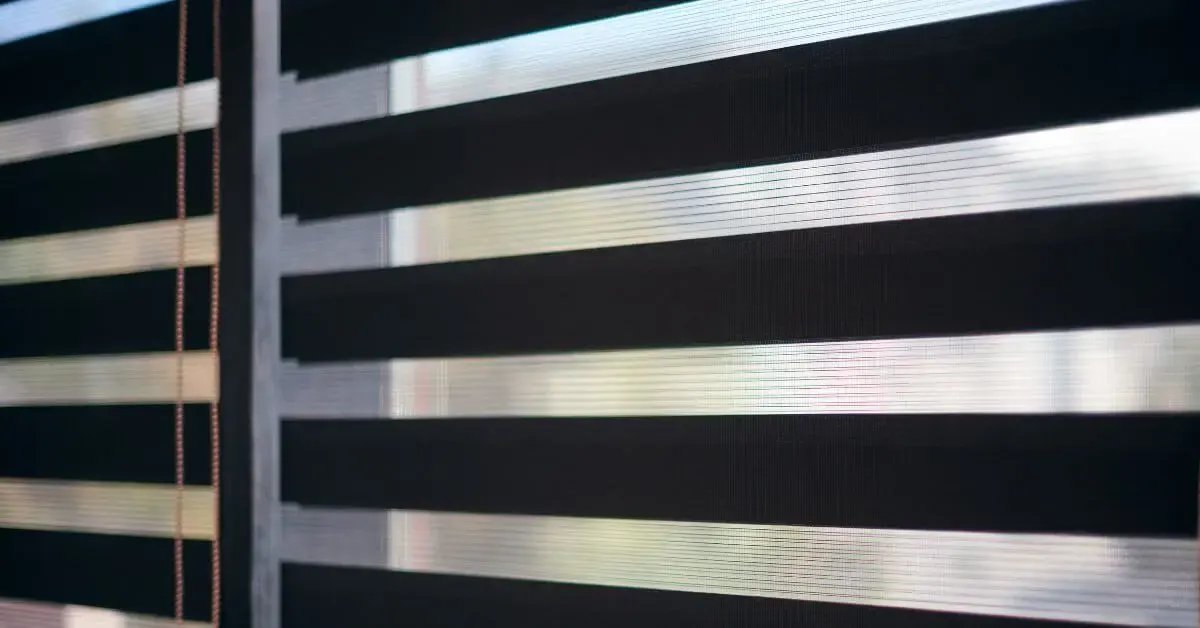 Zebra Shades Room by Room in Lawrence: A Design Playbook
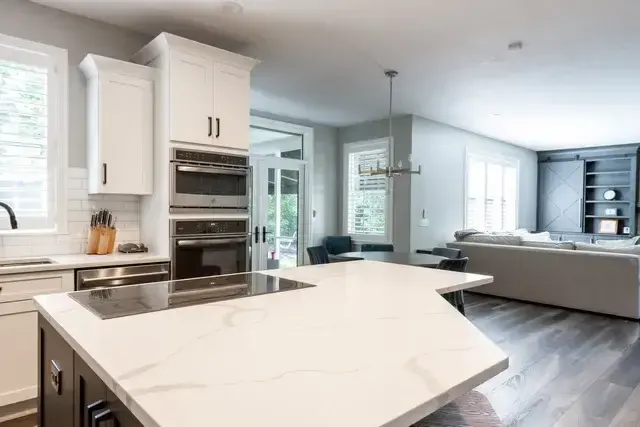 A Room by Room Window Treatment Guide for Lawrence Homes
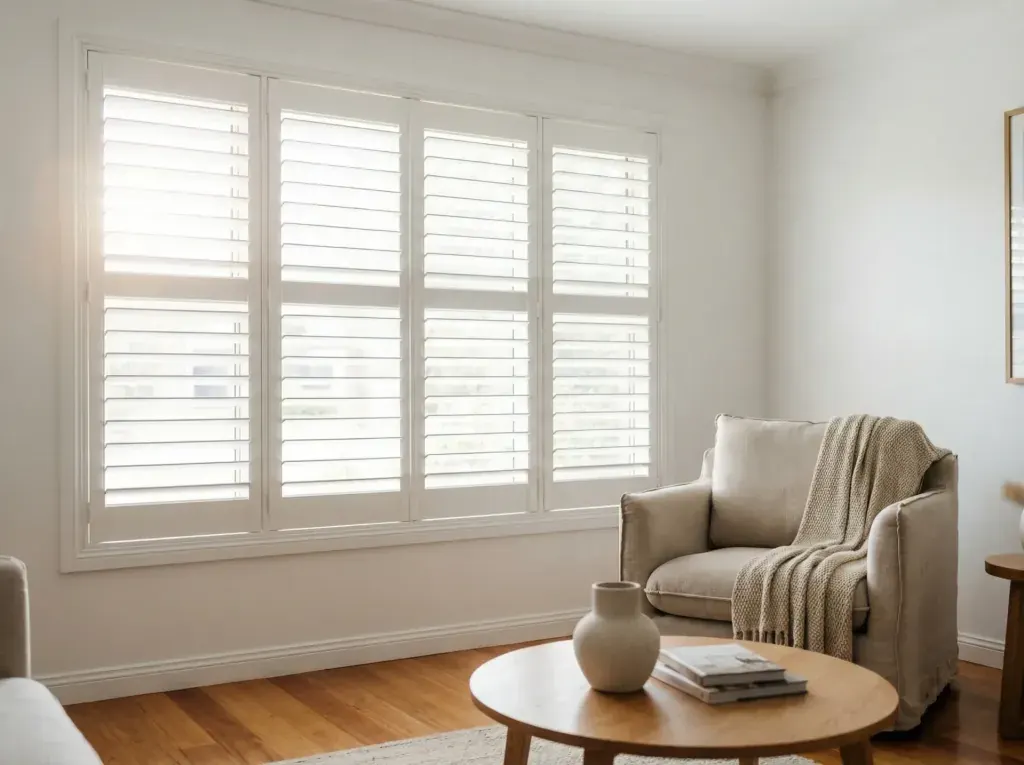 Plantation Shutters in Lawrence: Measuring and Spec Guide