Manual or Motorized: Choosing a Retractable Awning for Lawrence
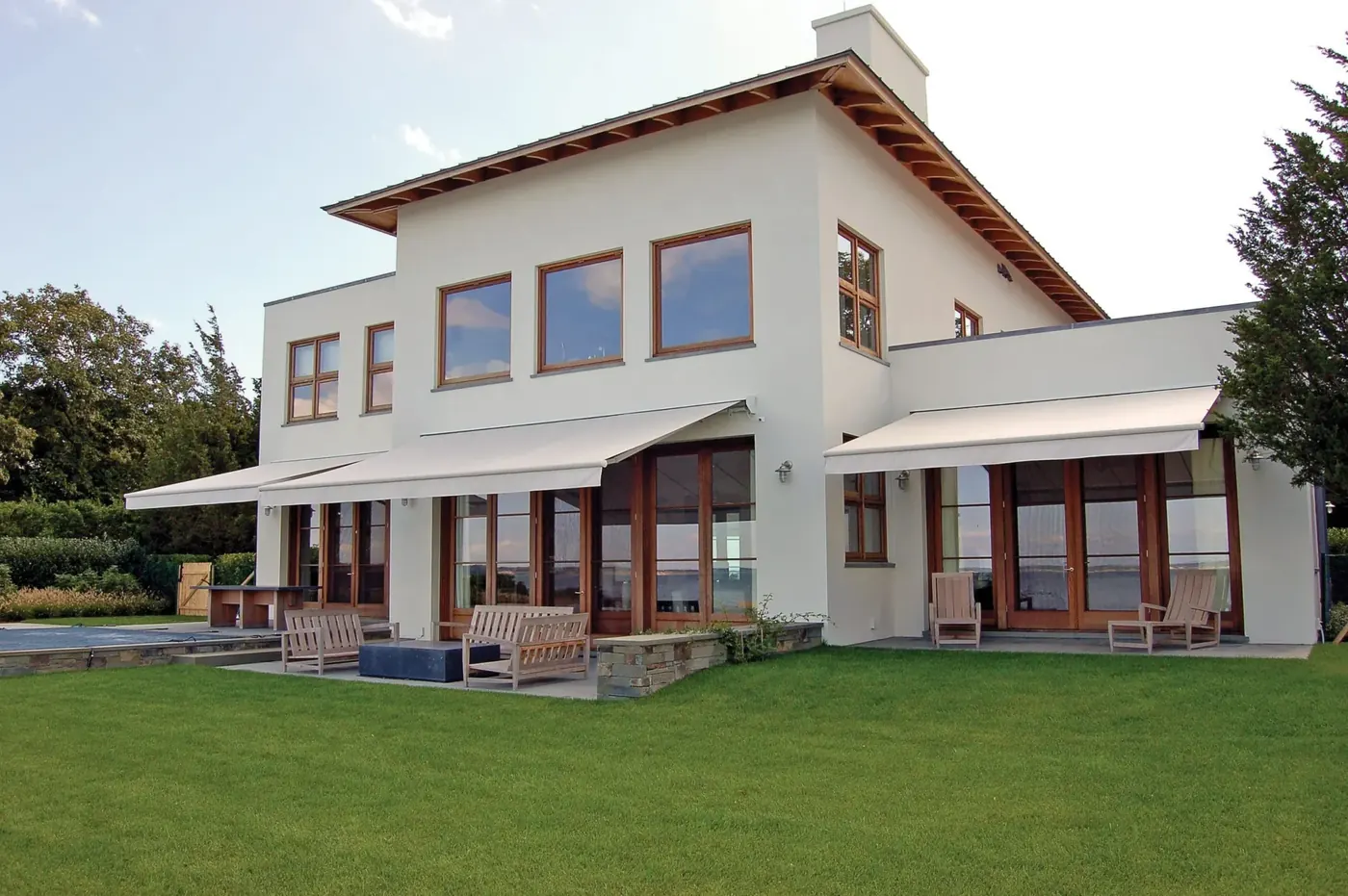
Retractable awnings sit in an awkward price band. They cost more than most people expect and less than a built structure, and the quotes vary enough that it's hard to tell what you're comparing. The spread is real, and it comes from a short list of choices. Here's what drives the number on a Lawrence patio, using national ranges rather than a made up local figure, plus which upgrades hold their value and which ones don't.
Sizing an Awning: Width and Projection
A lateral arm retractable awning is a roll of fabric on a tube, mounted to the wall, with two spring loaded arms that push the front bar out and away from the house. There are no posts at the outer edge, which is the entire point, so the arms carry the load and the wall takes all of it.
Width is how far the awning runs across the wall. Projection is how far it reaches out. People fixate on width because it's the number they can see, but projection is what decides whether anyone actually sits in shade. Two rules limit the choice. On nearly all lateral arm units, width has to exceed projection, since the arms need room to fold, so a narrow stretch of wall caps how far out you can go no matter the budget. Mounting height sets the useful projection too: the awning pitches downward as it extends, typically 15 to 25 degrees, so a unit mounted at eight feet with a twelve foot reach ends up low enough that a tall person notices.
Measure the furniture in a Lawrence backyard, not the wall behind it. A table and chairs need about ten feet of depth to stay covered, since people push back from the table when they sit.
What Drives the Price and What the Wall Has to Hold
Operation type is one of the bigger cost drivers here. A tubular motor and remote add a real amount to the base price, and hardwiring adds an electrician's time on top of that, while manual units skip both costs entirely. National ranges for an installed retractable awning run roughly $1,000 to $6,000, with size, hood type, fabric grade and mounting conditions moving the number as much as the motor does.
Whichever operation type gets chosen, the wall underneath has to carry the same load, since wind pulls up on an extended awning as hard as it presses down. Solid masonry takes heavy anchors set into the mortar pattern a manufacturer specifies. Brick veneer over a frame wall is a facing rather than structure, so fasteners have to reach blocking behind it. A Lawrence contractor should check this before quoting either a manual or a motorized unit.
Living With an Awning Through the Seasons
The single most damaging mistake is rolling the fabric up wet and leaving it that way for the winter. Retract it only once it's completely dry. Fabric put away damp comes out mildewed in spring, and while acrylic itself doesn't feed mildew, the dirt and pollen sitting on it do, and those stains are largely permanent once they set in.
Reaching for a pressure washer to clean it is a related misstep. It looks like the fast way to clean an awning, but the pressure can drive water into the seams and strip the fabric's finish. Mild soap and cool water, followed by a full rinse and a complete dry, is slower and actually works.
Leaving an extended awning up once real snow starts causes the same kind of damage from a different direction. Snow load bends arms well before it does anything to the fabric, and a motorized unit left powered on can get extended into a foot of snow by a stray remote press in Lawrence, which is why cutting power for the season is worth the two minutes it takes.
Get the projection right for the furniture you actually use, and put the anchors into something structural. The wind sensor is worth adding too. Those decisions carry the job, and everything else is preference. Lawrence Window Treatments looks at the wall before quoting anything, and we're insured and bonded, with the mounting detail written into the scope. Call (317) 999-5154 and we'll come out and measure the patio.
Fabric Choices and What They're Made Of
What actually makes a fabric feel right through a muggy Lawrence summer isn't just the shade, it's the airflow underneath it. Solution dyed acrylic breathes, so hot air moves up and out through the weave instead of collecting under the awning on a still August afternoon. The color also runs through the fiber rather than sitting on the surface, since pigment gets mixed into the liquid acrylic before the fiber forms, so fading is slowed rather than showing up as a bleached stripe by the second summer.
Vinyl coated polyester sheds rain better, which matters during a sudden storm, but it holds heat underneath in exchange, and on a still afternoon that difference is easy to feel from a chair. It can also turn brittle in a hard freeze once the season turns, which is one more reason acrylic remains the default choice here.
Manual or Motorized Operation
A tubular motor with a remote is the single biggest optional line on the invoice. Hardwiring adds an electrician's time on top of the motor itself, while battery and plug in options skip that circuit run and cost less installed. Manual units use a gear box and a crank handle instead, and they're the cheaper choice up front by a real margin.
The motor is worth defending anyway. A manual awning takes a minute or two of cranking each direction, so it tends to get left out through weather it shouldn't sit in. A motorized one gets retracted because retracting it takes seconds, and that protects the arms and the fabric, both of which cost more to fix than the motor cost to add.
A wind sensor is a modest add against the price of the unit it protects, and it's the easiest upgrade on this list to justify.
Frequently Asked Questions
How far out should the awning reach?
Measure the furniture, not the wall. A table with chairs needs about ten feet of depth to stay covered, since people push back when they sit, and a grill area needs less. Two limits still apply. Most lateral arm units require the width to exceed the projection, so a narrow wall caps how far out you can go. And the awning pitches downward as it extends, so a low mounting height puts the front bar right in your line of sight.
Can an awning mount to brick?
Yes, but it depends on whether the brick is structural or a veneer over a frame wall. Solid masonry takes heavy sleeve or wedge anchors placed where the manufacturer specifies. Brick veneer is a facing that carries almost nothing, so fasteners have to reach the rim board or blocking behind it, with the gap sleeved so tightening doesn't crush the brick face. That gets sorted out at a site visit, before anything is ordered.
What does a retractable awning cost installed?
Nationally, an installed retractable awning runs roughly $1,000 to $6,000, and the spread is wide because size, motor, hood type and fabric grade all move the number in different directions. A small manual unit over a back door sits near the bottom. An eighteen foot motorized awning with a full cassette and a wind sensor sits near the top. Mounting conditions matter too, since a wall that needs blocking added takes longer to anchor into than a clean frame wall.
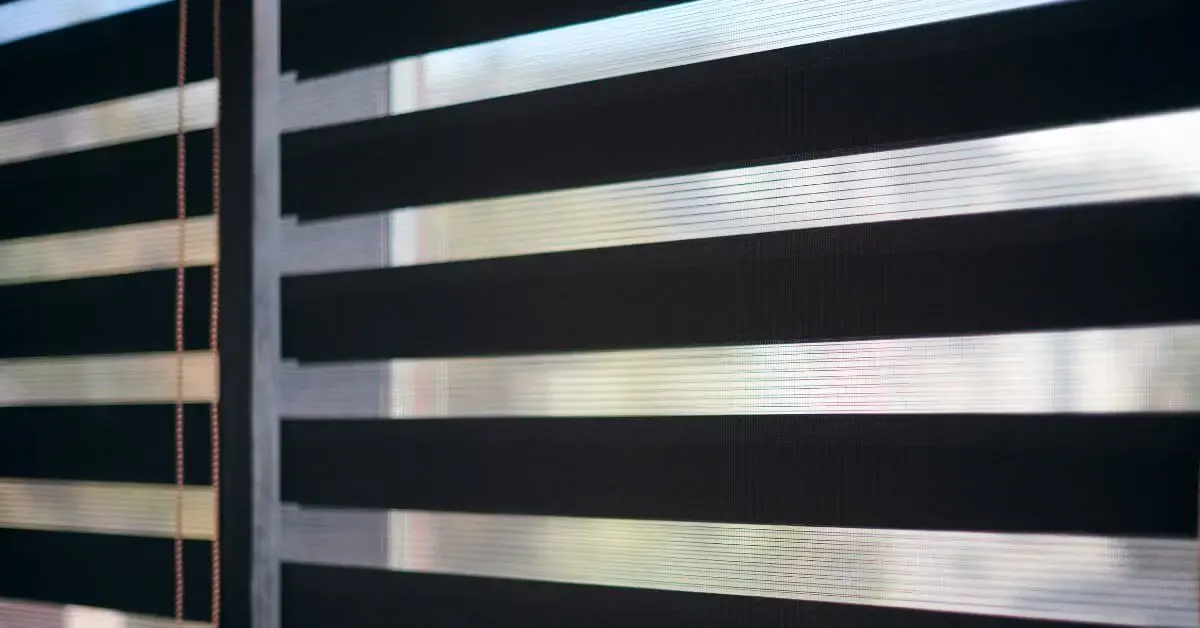 Zebra Shades Room by Room in Lawrence: A Design Playbook
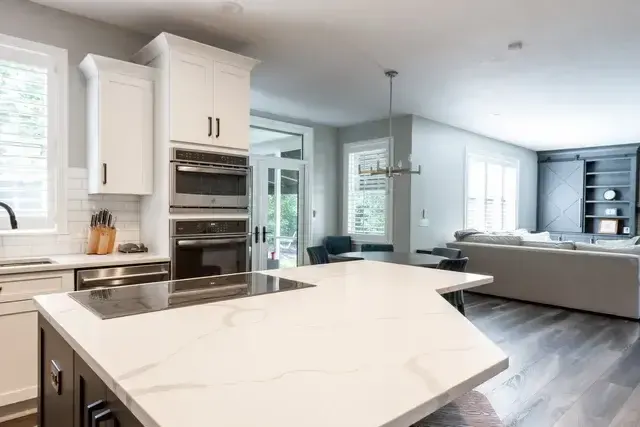 A Room by Room Window Treatment Guide for Lawrence Homes
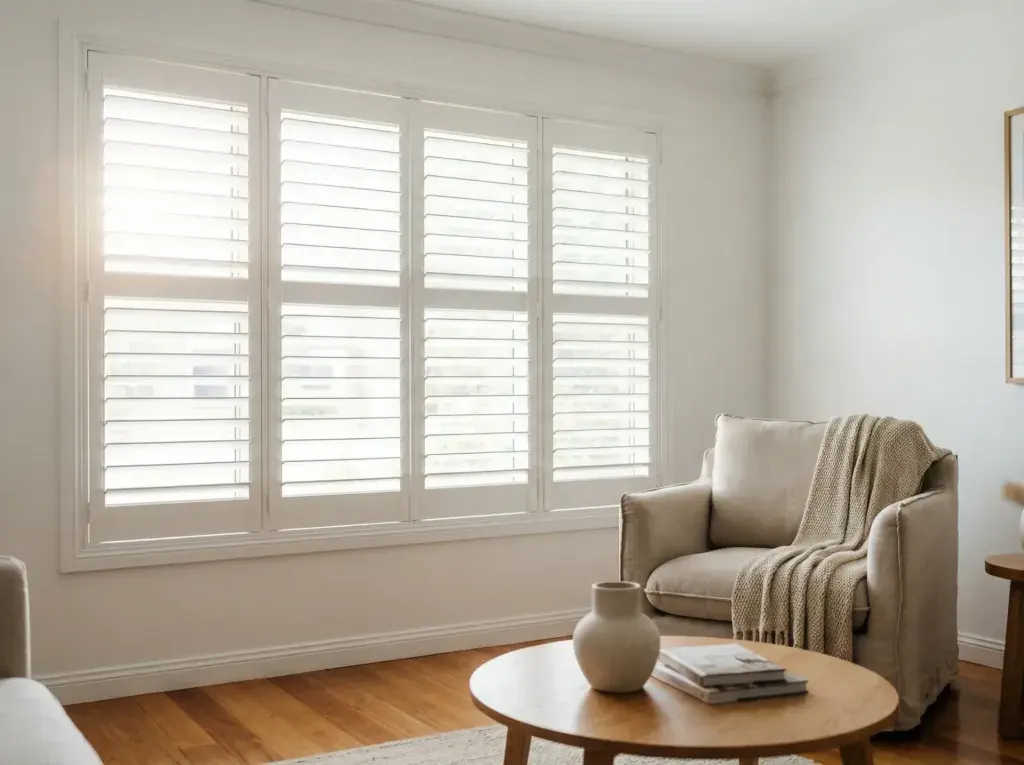 Plantation Shutters in Lawrence: Measuring and Spec Guide