Measuring Wood Blinds Right in a Lawrence Home
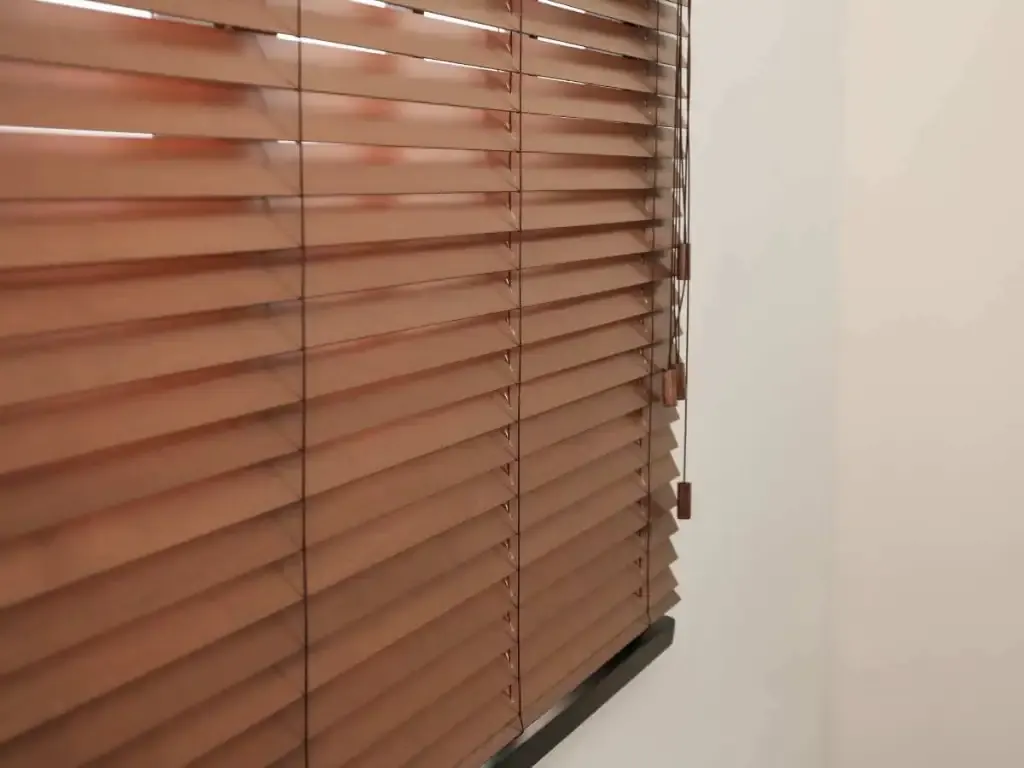
A wood blind either hangs flush or it doesn't, and the difference is decided at the measure, long before the fabricator touches a slat. Mounting depth, square, the deduction that leaves a gap at the edges: these are the numbers that matter more than the finish. Here is what a careful measure catches on a Lawrence window.
Real Wood or Faux Wood: How to Choose
Basswood is what people mean when they say real wood blinds. It's light, straight grained, takes stain evenly, and weighs roughly half of what a same sized solid vinyl slat weighs. Faux wood isn't one material either; it splits into solid PVC, heavy and inexpensive, and composite, a wood polymer core with a painted or wrapped face that sits between the two on price and weight.
Picking wrong costs money twice: once on the purchase and again when the blind fails early. Wood absorbs and releases moisture with the room, and a slat that moves enough will cup across its width or twist along its length, so it stops closing flat and starts leaking a thin line of light. That happens over a kitchen sink or in a bathroom with a shower, and just as often in a laundry room or a Lawrence mudroom. Faux wood trades that risk for a different one: cheap PVC can soften and bow on a long run of slats that takes direct sun for years, though composite resists that better.
Cost, Lift Choices and What Drives the Price
If you're comparing wood blinds against shades or drapery on price, the ranges are closer than most people expect. Nationally, wood blinds run roughly $60 to $600 a window in stock form, similar territory to a stock shade. Custom blinds, measured and installed, run nationally roughly $250 to $2,600 a window, again comparable to custom shade pricing, with material, from PVC through composite to basswood, and slat size driving most of the difference within that range.
Lift is the real point of comparison across product types. Corded is the least expensive option almost everywhere it's offered. Cordless and motorized both cost more. Cordless runs into weight limits sooner on a wide faux wood blind than it does on a lighter product, while motorized is usually the biggest upgrade on any window covering, blind or otherwise; battery powered versions nationally run roughly $100 to $300 a window less than hardwired ones. Custom fabrication across the board typically runs two to five weeks.
Weight is the detail that decides whether a wide blind stays easy to use or turns into a chore nobody bothers with. Get the slat size and lift matched to the opening before you order. Lawrence Window Treatments talks through those tradeoffs with every Lawrence homeowner at the measure. Call (317) 999-5154 to get started.
Weight, Slat Size and Width Limits
A 2 inch faux wood blind at 60 inches wide, taller than it is wide, is a genuinely heavy object, and weight is what breaks blinds. An unsupported headrail bows in the middle on a wide run, and the tilt mechanism stiffens under the load until it eventually strips. Long before either fails outright, the lift itself gets heavy enough that people quietly stop raising the blind and just leave it down.
Manufacturers cap faux wood width well below basswood's limit, simply because basswood weighs about half as much. Past that limit, splitting into two blinds on one continuous headrail keeps a shared valance and an unbroken sight line while each half operates independently; switching to basswood cuts the weight roughly in half if the room stays dry, and motorizing removes the effort question. Slat size matters too: a 2 inch slat is the default, but a bigger slat needs more room to rotate, and in a shallow inside mount it can hit the trim before closing fully.
Measuring, Mounting and Finishing Details
The valance decides how finished a window looks more than any other single choice. A flat valance matching the slats disappears into the window the way it's meant to. A crown valance is shaped and adds a more formal look, better suited to a dining room than a den. On an outside mount specifically, insist on returns, the short end pieces that wrap the headrail back to the wall, since without them you're looking at the bare end of the mechanism from the side.
Underneath the finish, the numbers still have to work. A 2 inch headrail wants roughly two to two and a half inches of flat mounting depth for a flush inside mount, and the Lawrence opening needs checking for square in three places across both width and height, since older homes rarely stay perfectly square over the years. If you're layering drapery over the blind later, mount the rod high and wide enough to clear the headrail and valance depth; measure that projection before the drapery gets made.
Where Wood Blinds Fit Best Room by Room
Here's where a wood blind actually fails by room, and it's predictable enough to plan around. Over a kitchen sink, or anywhere a bathroom steams up from a shower, real wood cups within a couple of seasons because moisture collects on the glass and runs down the sill regularly; faux wood or composite doesn't have that problem and belongs there instead. In a bedroom, the failure isn't material, it's light leakage: standard slats have a ladder hole punched through every one of them, and at night those holes line up into a column of small light dots against a streetlight, something route less slats fix by moving the ladder to the back of the slat.
A living room or dining room in a Lawrence house rarely fails this way at all, since it's usually dry and the windows are large enough that basswood's weight advantage over faux wood matters on a wide opening. The failure there is closer to the ceiling: a heavy blind on a wide window without a center support bracket, which bows the headrail over time regardless of material.
Frequently Asked Questions
Do real wood blinds warp in a bathroom?
Often, yes. Wood takes on moisture from the air and gives it back, and that movement shows up as slats that cup across the width or twist along the length. A cupped slat no longer closes flush against its neighbor, so light leaks through in a line and the closed blind looks wavy. In a bathroom with a shower, over a kitchen sink, in a laundry room, or anywhere else moisture collects, use faux wood or composite instead and skip the problem entirely.
Are faux wood blinds always cheaper than real wood?
Usually, but not always. Solid PVC is the cheapest thing in the category. Composite, a wood-polymer core with a painted surface, sits in the middle and can approach the price of basic basswood, while premium stained basswood is the most expensive of all. The better question is which material suits the room, since spending up on real wood for a damp window is how people waste money here, not by choosing the wrong price tier.
Will new blinds match ones I bought two years ago?
Not exactly, and anybody who promises otherwise has not looked at enough wood. Stain absorbs differently depending on the grain of the particular boards a mill runs that week, and painted finishes shift slightly between production runs too. Sunlight then ages the older set. If matching matters, order the whole room at once. If you are adding one window, put the new blind where it is not directly beside the old ones.
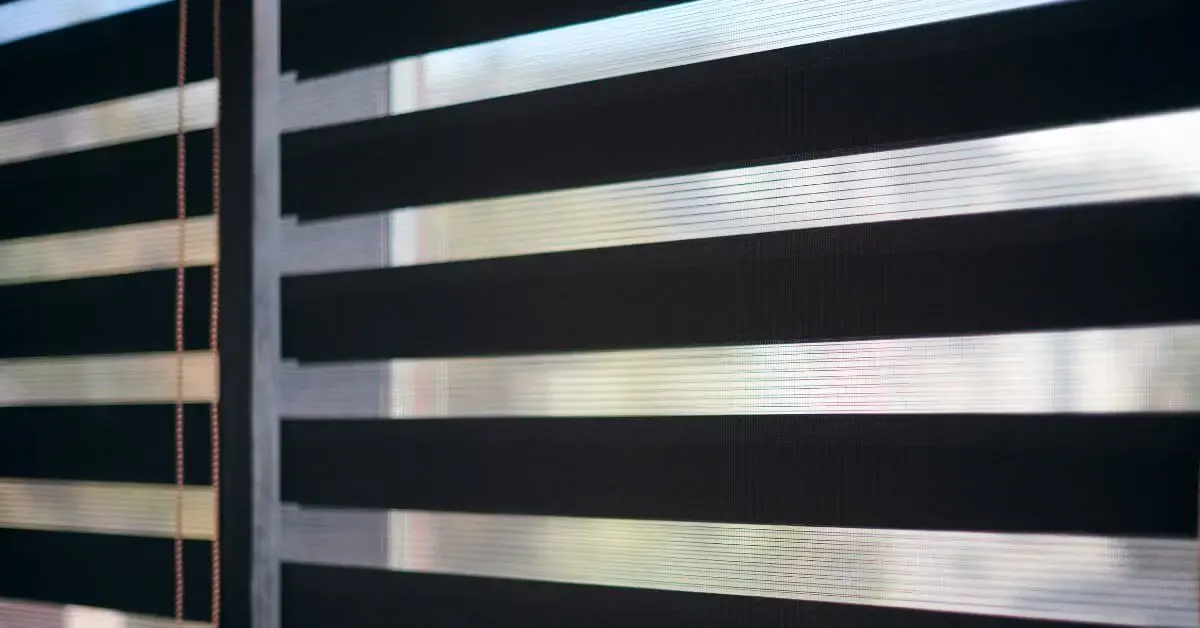 Zebra Shades Room by Room in Lawrence: A Design Playbook
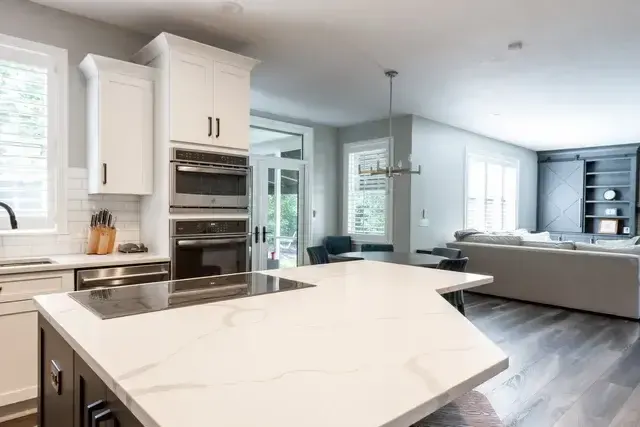 A Room by Room Window Treatment Guide for Lawrence Homes
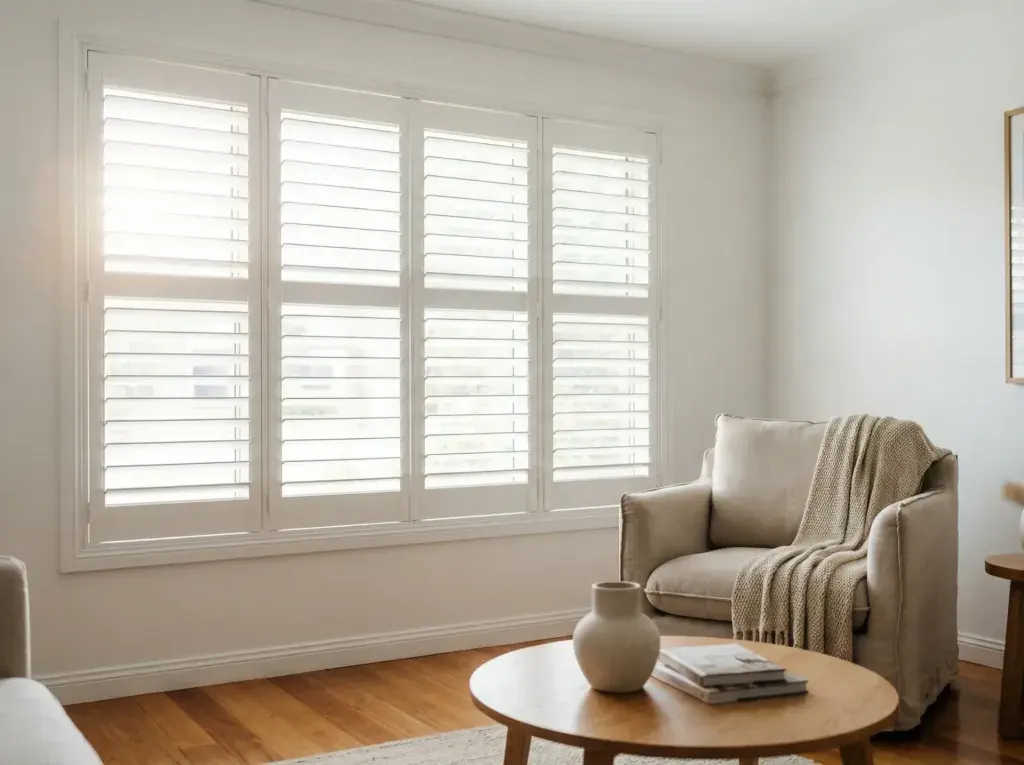 Plantation Shutters in Lawrence: Measuring and Spec Guide